

Spring steel flat bar is used wherever a part must flex and return: automotive leaf springs and stabilizer bars, railway rail clips, agricultural plow blades and spring tines, industrial springs, chain parts and tool blades. This article lists the common applications, the grades each market uses, and how to match the flat bar to the job.
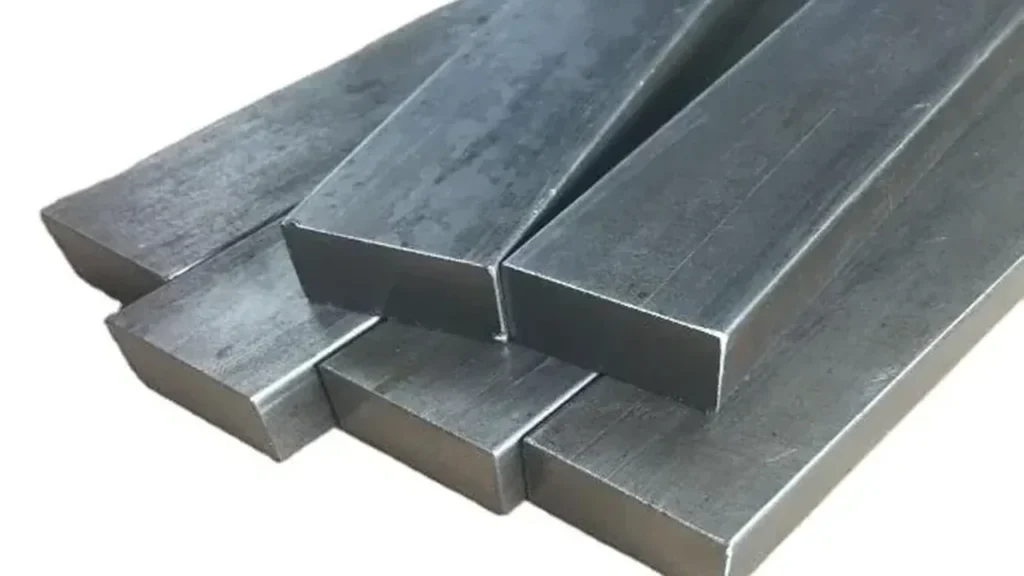
What Is Spring Steel Flat Bar?
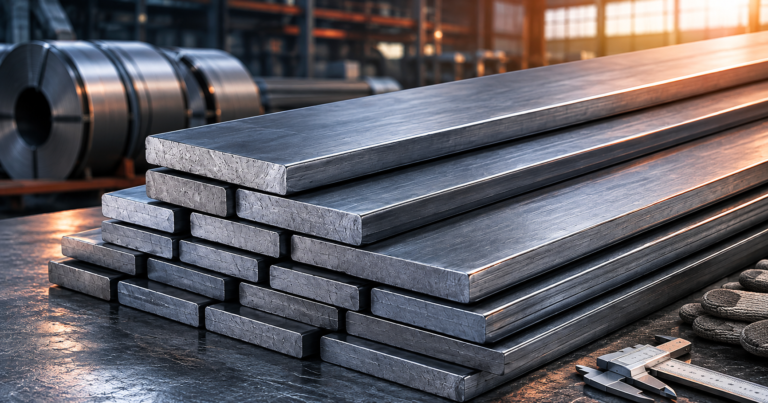
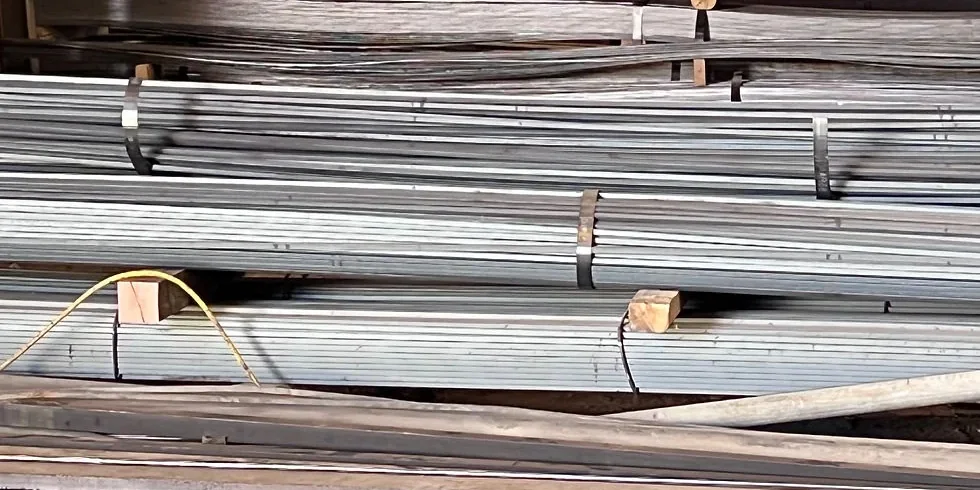
A spring steel flat bar is a hot-rolled, rectangular steel section supplied as a straight bar for cutting, punching and forming into springs and spring-like parts. It is rolled from alloy spring steel and oil heat treated for uniform hardness, so the bar behaves predictably when you cut it, punch it and heat treat it in your own workshop.
The production route matters as much as the grade. Hot rolling shapes the section; the oil quench that follows hardens it through the thickness. Oil, not water, hardens the section without distortion and cracking, and the result is a bar that returns to shape after deflection.
Standard dimensions cover most spring work; the table below lists the typical range.
| Dimension | Typical Range / Standard |
| Width | 38–150 mm (1.5–5.9 in) |
| Thickness | 4–35 mm (0.16–1.38 in) |
| Length | Cut to drawing |
| Tolerance | ASTM, GB, JIS, DIN or BS |
| Surface | Black, pickled or coated |
The bar is stocked in carbon spring steel 65Mn, silicon-manganese grades 60Si2Mn and 60Si2MnA, chromium grades 55Cr3, 55CrMnA and 60CrMnA, the JIS G 4801 series — SUP6/9260, SUP9/5155, SUP9A/5160, SUP10A/6150, SUP11/51B60 — and vanadium steel 50CrV4. We supply spring steel flat bar in the grades above, and the grade choice depends on the stress, the section thickness and the heat treatment your line can apply.
Tolerances matter: a leaf pack fits only if every bar holds the same width and thickness over its full length.
Automotive & Railway Springs
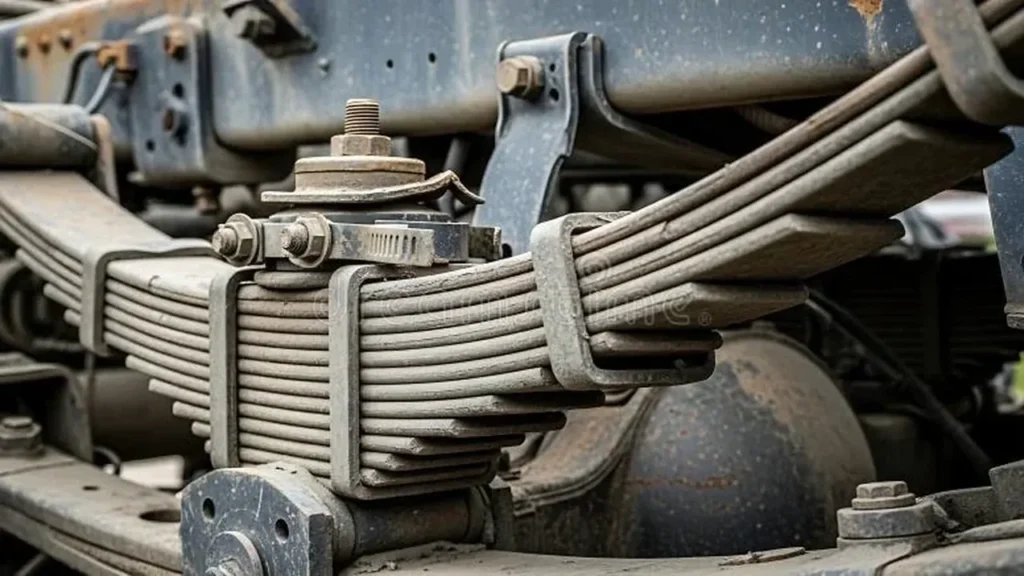
Automotive suspension is the largest single market for spring steel flat bar. Leaf springs carry the rear axles of light trucks and commercial vehicles, and the same material forms stabilizer bars, clutch parts, seat frames and brake components. Every one of these parts is a long, flat strip that flexes millions of times in service. That is why the starting point is a flat bar: your workshop cuts it, punches it and heat treats it to the finished spring.
Leaf springs are built as multi-leaf packs or single parabolic leaves. The pack is assembled from bars of decreasing length, so consistency of cross-section and straightness matters over long lengths. Heat treatment for leaf work is oil quenching at 830–860 °C and tempering at 460–510 °C, which brings medium sections to the 44–48 HRC band that suspension normally targets.
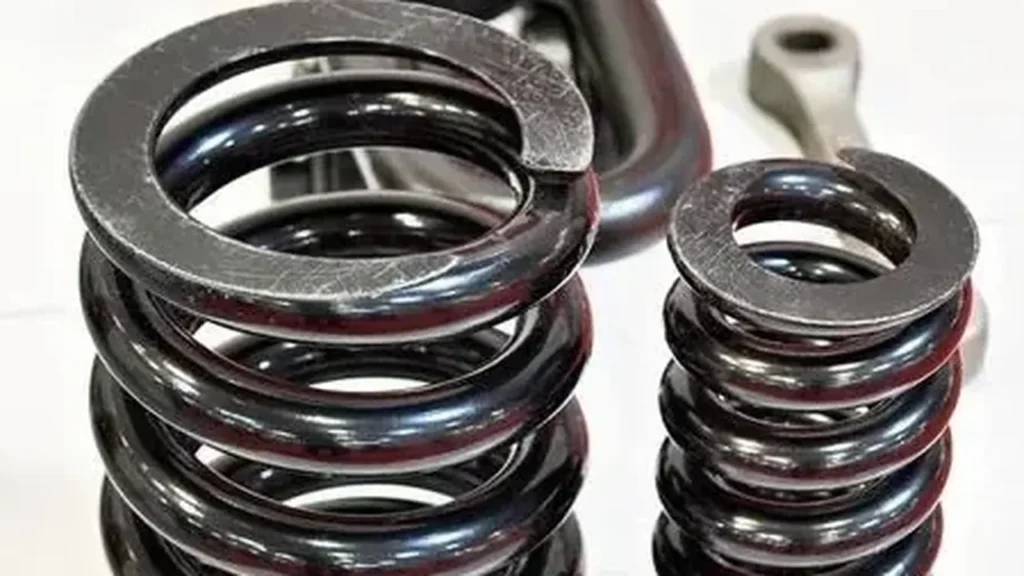
Coil and torsion springs start from the same bar. Independent-suspension coils, clutch covers and valve springs are cut from bar, coiled and stress-relieved, then hardened to a band similar to leaf work. Suspension, clutch and brake parts all share the same requirement: a flat section that holds its elastic limit under repeated deflection.
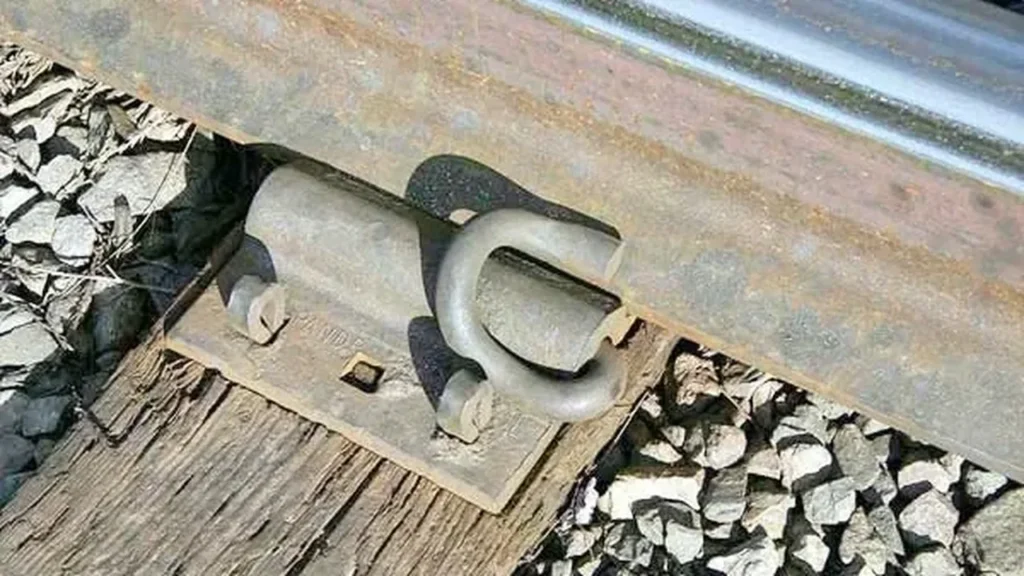
Move from road to rail and the same material family appears in a different form. Rail clips and elastic rail fastenings are pressed from spring steel flat bar, and wagon buffer springs are coiled from the same stock. A rail clip is pre-stressed in service, so the steel must hold its shape at high local stress and is supplied heat treated for this duty.
Leaf springs are often pre-set or shot-peened to put beneficial residual stress on the tension face, which extends service life considerably under the same load. That is a shop-floor process, but it is why surface condition matters from the first order: scale, pits or decarburization on the supplied bar cannot be repaired by later peening.
| Application | Typical Grade | Requirement |
| Leaf springs (light–medium) | SUP9, 60Si2Mn | Medium sections, oil quench |
| Leaf springs (heavy-duty) | SUP9A (5160) | Thick sections, core hardening |
| Stabilizer bars | SUP9, 60Si2MnA | Twisted and formed ends |
| Rail clips / fastenings | 60Si2Mn, 65Mn | Pressed from flat bar |
| Wagon buffers | SUP9 | Impact and high-cycle loads |
Agricultural Machinery & Implements
Agricultural equipment is the second big consumer of spring steel flat bar. Plow blades, disc blades, subsoiler tines and spring tines must flex under impact and keep their shape, which is exactly what spring steel does. The bar’s flat section suits these parts directly: a blade or tine is a long, narrow strip, so the mill delivers near-net geometry.
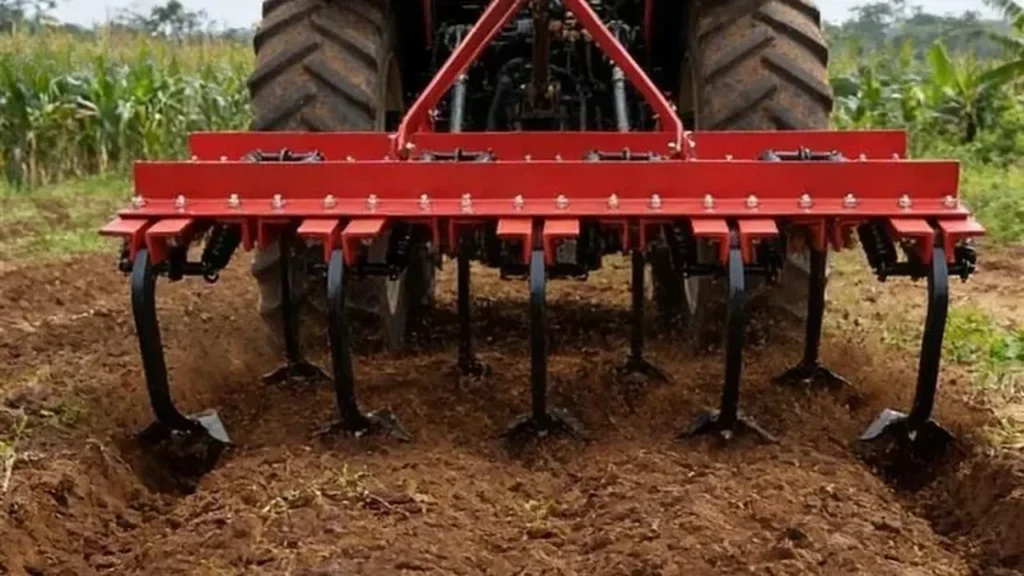
Plow and tillage parts are specified for impact toughness and edge wear rather than for a single brand of steel. Harrow tines, cultivator springs and mower blades run through thousands of flexes per hour, and a soft core or a decarburized surface fails first. Mower blades, seeder parts and fertilizer openers use the same flat bar, cut and punched before heat treatment.
The two families serve different jobs on the same machine. Disc blades are hardened at the cutting edge to wear-resistant levels while the centre stays tough; spring tines, by contrast, are tempered to a spring hardness so they flex instead of cracking. Both start as spring steel flat bar, and the heat treatment is what separates the blade from the spring.
The same stock covers small implements: spring tooth harrows, potato digger fingers and baler parts all come from spring steel flat bar.
Tillage speed and soil type change the duty: sandy soil wears edges fast, clay loads the tines harder. A stock width used across several machines cuts inventory, which is why most OEMs standardize on one or two sections and order the bar in coil-free straight lengths.
| Application | Typical Grade | Requirement |
| Plow blades | 65Mn | Impact and edge wear |
| Disc blades | 65Mn, 60Si2Mn | Edge hardness |
| Spring tines | 60Si2Mn | High-cycle flex |
| Mower blades | 65Mn | Punch and harden |
| Cultivator / harrow springs | 60Si2Mn | High-frequency flex |
Industrial & Mining Equipment
Industrial machines consume spring steel flat bar in springs, chain parts and conveyor components. Vibration screen springs, crusher spring seats, shock-absorber internals and track tension springs for excavators all rely on the same oil heat-treated bar. These parts work under repeated impact, so the grade and the heat treatment decide how long the machine runs between overhauls.
A vibrating screen’s springs isolate the frame from the exciter and see millions of cycles, which is why the hardness band matters more than the raw strength figure. Crusher spring seats carry shock loads at coarse sections, and track tension springs for tracked equipment must hold set under continuous load. Heavy sections take a chromium spring grade; the isolation springs run on a lighter silicon-manganese grade (table below).
For maintenance and replacement work, stock the flat bar in two or three grades and you cover most orders.
Screen and crusher springs are usually ordered as matched sets: a mixed set of old and new springs puts uneven load on the machine frame. Order spares as full sets from the same production lot, and keep the mill certificate with the set for the next maintenance cycle.
| Application | Typical Grade | Requirement |
| Vibration screen springs | 60Si2Mn, SUP9 | Millions of cycles |
| Crusher spring seats | 55Cr3, SUP9 | Shock loads |
| Track tension springs | SUP9 | Continuous load |
| Chain / conveyor parts | 65Mn, 60Si2Mn | Wear and flex |
Tools, Blades & General Engineering
Beyond springs, the same flat bar becomes blades and tools. Knife blades, saw blades, chisels, scrapers and garden tools use spring steel because it holds an edge and flexes instead of breaking. Blade makers buy a flat bar because it hardens to a useful blade hardness and is easier to source than dedicated tool steel. Blade work typically targets a 52–55 HRC working band, with the spine drawn softer so the blade bends before it snaps.
General engineering rounds out the list. Spring clips, clamps, washers, pressed parts and vibration dampers for buildings are all cut from spring steel flat bar. If a part must spring back, the flat bar family has a grade for it; budget carbon grades keep light-duty parts cheap, safety-critical parts move up the hardening scale.
Chain parts and conveyor components sit on the same shelf: they are punched from flat bar and hardened to resist wear as well as flex, which is why one stock serves both springs and the non-spring parts around them.
Garden tools are a quieter but steady buyer of spring steel flat bar. Spades, hoes and pruning shears take a 65Mn or 60Si2Mn blank, hardened for edge life and drawn so the handle end stays tough. A cheap tool fails at the weld; a spring-steel tool bends first and straightens back.
Saw blades and press-tool parts set a different target. Teeth and punches want maximum wear resistance, so they are hardened harder than hand tools on thinner sections; a saw blade is tempered low and hard, a spade or chisel is drawn softer at the spine. Order the bar and tell the heat treater which end of the band you need.
Blade blanks are cut slightly oversize and ground after hardening, because quench scale and distortion leave the edge a few tenths of a millimetre over. Account for that when you order the bar thickness.
| Application | Typical Grade | Requirement |
| Blades / tools | 65Mn, 5160 | Edge retention |
| Saw blades | 65Mn | Punch and harden |
| Clips, clamps, washers | 65Mn | Light duty |
| Building dampers | SUP9 | High-cycle flex |
How to Match Spring Steel Flat Bar to the Application
The table below is the working starting point for most orders. Treat the hardness and section figures as typical working values and confirm the final band with your heat treater.
| Application | Recommended Grade | Hardness Target | Typical Section |
| Automotive leaf springs | 60Si2Mn, SUP9 | 44–48 HRC | 8–16 mm (0.3–0.6 in) |
| Heavy-duty truck leaves | SUP9A (5160) | 44–48 HRC | 16–35 mm (0.6–1.4 in) |
| Agricultural tines | 60Si2Mn | 42–46 HRC | 5–10 mm (0.2–0.4 in) |
| Railway rail clips | 60Si2Mn, 65Mn | 45–50 HRC | 6–12 mm (0.2–0.5 in) |
| Industrial vibration springs | 65Mn | 40–45 HRC | 4–8 mm (0.2–0.3 in) |
| Tool blades | 65Mn, 5160 | 52–55 HRC | 3–6 mm (0.1–0.2 in) |
When you weigh spring steel flat bar for a new application, four questions decide the grade: stress level, section thickness, heat treatment capacity, and surface or tolerance requirements. The silicon-manganese family, documented in the 9260 datasheet on SteelStandart, suits sag-critical work; chromium grades buy hardenability in thick sections.
- Stress and fatigue: high-cycle parts move to 60Si2Mn or SUP9; light-duty parts can run on 65Mn.
- Section thickness: plain carbon and silicon-manganese grades harden fully only to about 15–20 mm in oil; beyond that depth, chromium grades such as SUP9A (5160) are needed to harden the core (9260 datasheet on SteelStandart).
- Heat treatment: if your line already tempers at 44–48 HRC, most leaf grades drop into the same process with no new tooling.
- Surface: decarburization hurts fatigue life, so pickled or coated bar protects the surface before your own heat treatment.
Match the grade to the application and the section, and both steels perform. The common field failures — soft cores in thick leaves, broken tines, sagging springs — are almost always a grade-versus-section mismatch, not a weakness of the steel. A harrow tine and a stabilizer bar both start as flat bar, but each runs on its own grade; swapping them buys nothing.
Sourcing Hot Rolled Spring Steel Flat Bar
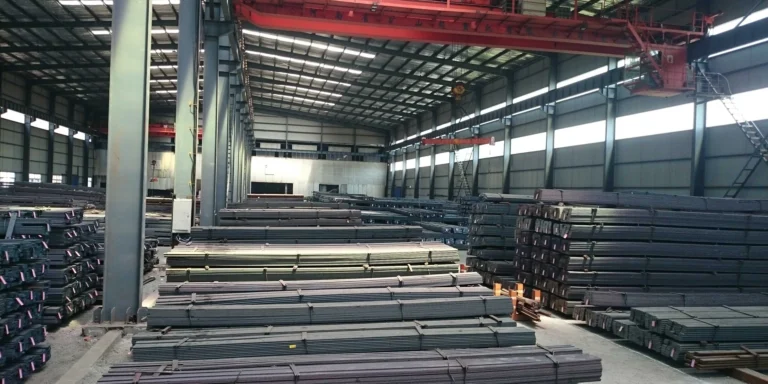
Qiangbang Steel supplies hot rolled spring steel flat bar in widths of 38–150 mm (1.5–5.9 in) and thicknesses of 4–35 mm (0.16–1.38 in), cut to length per your drawing. Tolerances are held to ASTM, GB, JIS, DIN and BS standards, and surface options include black, pickled and coated finishes.
MOQ is 25 metric tons, annual production capacity is 400,000 tons, and every shipment carries a mill certificate. Production lots pass through physical and chemical testing laboratories before release, and ISO-certified manufacturing covers the quality system. Lead time for standard sections is 30–40 working days, payment is by T/T or L/C, and shipping is by sea.
FAQ
Q1. What are the most common applications for spring steel flat bar?
Automotive leaf springs and stabilizer bars, railway rail clips, agricultural plow blades and spring tines, industrial springs, chain parts and tool blades. The common thread is a part that must flex and return without taking a permanent set.
Q2. Which grade should I use for automotive leaf springs?
SUP9 or 60Si2Mn for medium sections; SUP9A (5160) for thick heavy-duty leaves that must harden through the core. Tell the mill the section thickness and the target hardness, not just the grade name.
Q3. Can spring steel flat bar be cut and punched before heat treatment?
Yes. The hot-rolled bar machines, cuts and punches like plain carbon steel; forming comes first and heat treatment after. Shearing leaves a work-hardened edge, which is removed or accepted at your call, and the later quench-and-temper cycle restores a uniform structure. This is why most spring makers buy bar and run their own quench-and-temper line.
Q4. What is the difference between hot-rolled and oil heat-treated flat bar?
Hot-rolled bar is for customers who quench and temper in-house. Oil heat-treated bar leaves the mill already hardened and tempered, ready to cut and assemble. State the delivery condition on the order.
Q5. Do you supply custom widths, lengths and grades?
Yes. Widths from 38–150 mm (1.5–5.9 in), thicknesses from 4–35 mm (0.16–1.38 in), lengths cut to your drawing, and custom grades on request. MOQ is 25 metric tons.
Q6. What surface options are available?
Black, pickled and coated. Pickled or coated bar protects the surface before your own heat treatment and is the usual choice for fatigue-critical springs; coated bar also resists corrosion during storage and sea freight.
Q7. What hardness should a spring steel flat bar part be tempered to?
It depends on the duty. Leaf springs normally temper to 44–48 HRC, rail clips to 45–50 HRC, and tool blades to 52–55 HRC; the table in the selection section gives the typical band for each application. If your heat-treatment line cannot hold the band, the grade or the section may need to change first.
Q8. Do you accept small trial orders before bulk purchase?
The standard MOQ is 25 metric tons. For trial lots, contact us with the grade and section you need; we confirm availability, terms and lead time for your specific order.
Request a Quote
Not sure which grade fits your application? Send the part, the load and the section thickness. Our technical team confirms the grade, the heat treatment and the dimensions, and quotes bulk pricing for your volume. Contact us — we reply with a specification sheet, not just a price.